Sunday, March 4, 2018

Black Walnut - Juglans nigra

Juglandaceae - Walnut Family
"A Year With the Trees" - Tree Number 56
Black Walnut
Juglans nigra


Spring


Black Walnut  - Asheville Botanical Gardens http://www.ashevillebotanicalgardens.org/
 The beautiful deep-green catkins are all over the tree.

Summer
Black Walnuts growing in the summer

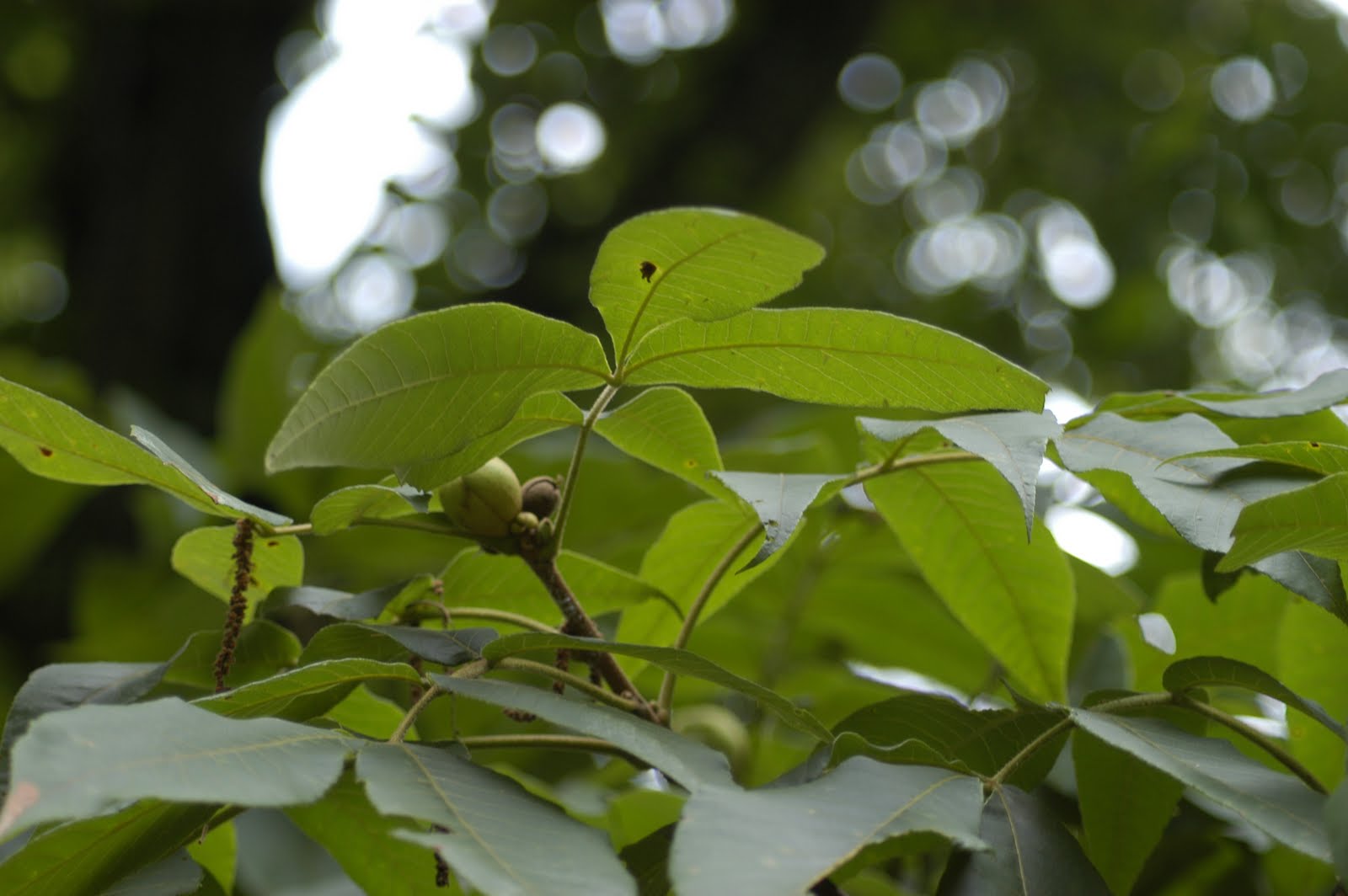
These are the summer leaves of the Black Walnut tree with their finely toothed  leaves.


The Black Walnut in July
The black walnut’s leaf is 12 to 24 inches and has from 15 to 23 leaflets. Each single leaflet can be 2 to 3 inches long.


Fall

The Walnut develops in a green skinned ball on the tree. When it falls from the tree it turns black. After a few weeks on the ground, the black skin gets rotten and comes off and we are left with a delicious walnut. The walnut is encased in a very hard shell. One can be challenged getting the walnut out of it's shell.

Black Walnuts on the ground in the Fall

The Black Walnut Tree

The Black Walnut Tree

This majestic Black Walnut tree has the look of fall. The leaves have turned yellow, most of the nuts have fallen to the ground and some have turned black. This black walnut tree lives in West Virginia at the New River Gorge National Park.


Winter

The Black Walnut Tree

Asheville Botanical Gardens.www.ashevillebotanicalgardens.org


The Black Walnut Tree
 Asheville Botanical Gardens.www.ashevillebotanicalgardens.org


The Bark of the Black Walnut tree is grayish black and deeply furrowed.  This tree can grow up to 130 feet tall.


For the love of the trees,
Becky

Mockernut Hickory - Carya tomentosa

Juglandaceae - Walnut Family
"A Year With the Trees" - Tree Number 54
Mockernut Hickory
Carya tomentosa


Spring


Carya tomentosa, Mockernut Hickory
The Mockernut Hickory - Carya tomentosa -Tomentosa is latin for hairy.  The reason that called it tomentosa is due to the hairs on the leaves and stems.

This Mockernut Hickory lives in Gatlinburg at Mynatt Park near the Smoky Mountain National Park.  The leaves were just coming out when I took this photo in April a few years ago.

Mockernut hickory nuts are eaten by squirrels when they are green.  Other mammals that eat the nuts and sometimes bark are black bears, foxes, rabbits, beavers, and mice.

This tree is a long living tree and can live up to 500 years.  It can grow up to 100 feet and have a  2 foot diameter.

Summer


The Mockernut Hickory Tree in the summer sunshine.

The Mockernut Hickory is known to be furry or hairy; and with the summer sun shining through the leaves, you can see this.  This is one of my favorite photos of this tree. 
www.RobertPriddyPhoto.com


Fall


The Mockernut Hickory Tree

The Mockernut Hickory Tree

The Mockernut Hickory Tree

The Mockernut Hickory Tree, Cookeville, Tennessee
Fall is evident in this majestic Mockernut Hickory in Cookeville, Tennessee. This tree lives besides my Sister's house.  The buds are alive with light this morning; the yellow leaves are shining as the sun's light shows through the leaves.

An October moment in Tennessee

A tall, long-branched hickory tree
A cool fall breeze
Leaves stirring on the half-covered branches
Yellow, gold, and green color drifting slowly to the ground
Swollen buds sleeping till spring
Nuts holding onto the branches
Steady trunk holding onto the earth
Strong gray bark
A crow calls
A bird chirps
Insect singing
Amazed by all I witness
How do I step away from this place with all mysteries of nature unfolding around me?


Winter


Mockernut Hickory, Cookeville, Tennessee
This tree lives in my sister's yard. It is very tall, with two trees at the base. It looks over 200 feet tall.
The Hickory tree is filled with nuts that nourish the animals and the earth. The earth around this tree is very rich from all the nuts and leaves that decompose back to soil each year.  The smell of this tree is very distinctive and what I would call "earthy".

The Mockernut Hickory Tree

This tree lives at the Asheville Botanical Gardens. It looks beautiful against the snowy day.
ashevillebotanicalgardens.org


The Champion Mockernut Hickory

One champion Mockernut Hickory tree is almost 12 feet in circumference in Humphreys City, Mississippi.

For the love of the trees,
Becky
Mockernut Hickory - Carya alba

Shagbark Hickory - Carya ovata

Juglandaceae - Walnut Family
"A Year With the Trees" - Tree Number 53
Shagbark Hickory
Carya ovata


Spring


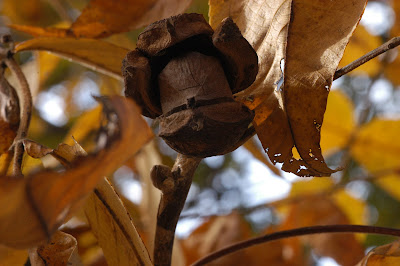
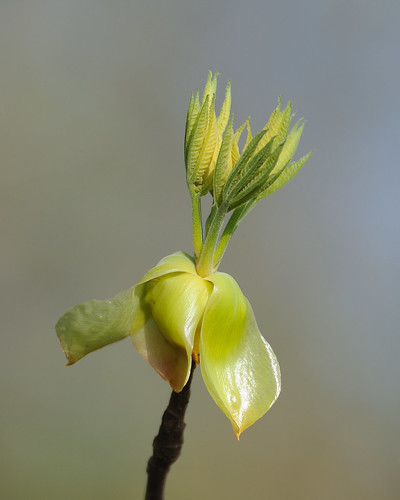
The Shagbark Hickory leaf bud opening has been captured in this photo by JanetandPhil.


Summer


The Shagbark Hickory Tree in Summer in the Great Smoky Mountains
Shagbark Hickory - Carya Ovata

As my naturalist mentor/teacher, Ken Voorhis, would say, "Oh Vat A Tree this is!"  Do you get it???

The shaggy bark is my number one year-round ID tip. The bark peels from the bottom in long strips.

The leaves are alternate and compound, 8-14 inches long with 5 to 7 leaflets (usually 5).  They are dark yellowish green above and paler below with finely toothed edges.

The Hickory nuts are growing on the tree at this time of year. The Hickory nut is covered with a husk that is yellowish brown to black. It has four ribs and is about 1.5 inches long and .5 inches thick. The husk has a slightly flattened base. The nut inside is light tan and slightly flattened and is ridged on four sides with sharp tips on each end.

Fall


from my journal - the yellow leaves of the Shagbark Hickory tree


Winter


Shagbark Hickory, Carya ovata


Shagbark Hickory in the wintertime.   Just look for that bark!


Thank you, Craig, for this amazing photo of the Shagbark Hickory. You can read Craig's blog, at www.earlyforest.com .


The Champion Shagbark Hickory Tree

The Champion Shagbark Hickory Tree lives in Anne Arundel, MD. It is 107 feet high and has a circumference of 107 feet.


For the love of the trees,
Becky

Saturday, March 3, 2018

Pignut Hickory - Carya glabra

Juglandaceae - Walnut Family
"A Year With the Trees" - Tree Number 52
Pignut Hickory
Carya glabra


Spring


Pignut Hickory by homeredwardprice
Pignut Hickory a photo by homeredwardprice on Flickr
Some new Spring leaves on a Pignut Hickory tree.

A Pignut Hickory tree at the Asheville Botanical Gardens.
http://ashevillebotanicalgardens.org

Summer


The Pignut Hickory leaves
Pignut Hickory

Fall

On every walk you take, on every day, be still, listen, look around you; what can you learn from nature today? Be observant.

Carya Glabra, Pignut Hickory in the Fall

The Pignut Hickory nut

The Pignut Hickory Tree
A Pignut Hickory Tree Bud
Autumn is in the air, the light, the sounds, and even the smells.  The air is cooler, the light is the light of fall.  It is intense, clear and almost yellow. The sounds are of wind in the leaves, acorns falling, and insects chirping. The smell? Perhaps it is the smell of leaves going back to the earth.

How does the Pignut Hickory look in the fall as compared to the summer? to the spring? The now brown nuts are falling off the tree, the leaves are getting browner and have an older look about them.

This tree smells of Fall as it stands in the bright light of a cool September day.


Winter


Pignut Hickory in Winter
Pignut Hickory Bark

Champion Pignut Hickory Tree

A champion Pignut Hickory tree is on St. Simon Island, it is 105 feet tall and it has a diameter of 5'4".


For the love of the trees,
Becky

Thursday, March 1, 2018

Bitternut Hickory - Carya cordiformis

Juglandaceae - Walnut Family
"A Year With the Trees" - Tree Number 51
Bitternut Hickory
Carya cordiformis


Spring
This tall and strong Bitternut Hickory lives at the Asheville Botanical Gardens.  http://www.ashevillebotanicalgardens.org/

This interesting bark is shallowly ridged and has an orange-like color that shows through the sections of bark.
Yellow dye is made from the inner bark. 

Summer


The Bitternut Hickory Tree in the Summer
The bitternut hickory tree has compound leaves with
7 to 9 leaflets.
Fall
from my journal...yellow colored fall leaves...
Winter


Bitternut Hickory - Carya cordiformis
This Bitternut Hickory lives at the Asheville Botanical Gardens.  www.ashevillebotanicalgardens.org
The bud at the end of each twig is over 1/2 inch long. The bud is sulfur yellow and is present all year long.  The bitternut is small and bitter and inedible.   I hope and plan to add a photo of the bud and bitternut very soon.


For the love of the trees,
Becky


Red Buckeye - Aesculus pavia

Hippocastanaceae - Buckeye Family
"A Year With the Trees" - Tree Number 50
Red Buckeye

Aesculus pavia


Spring


The Red Buckeye at the Asheville Botanical Gardens
Aesculus pavia, Red Buckeye, The Botanical Gardens of Asheville, 

Aesculus pavia, Red Buckeye, The Botanical Gardens of Asheville


The Red Buckeye Tree has these interesting red flowers that appear in April.  This Red Buckeye lives at the Asheville Botanical Gardens. ashevillebotanicalgardens.org

This tree is native to the Southern Appalachian Mountains.  It is often visited by hummingbirds when the red flowers are in bloom.


Summer


A Red Buckeye flower in the early summertime.


Fall

Photos and images to be added as I get busy here.  Does anyone have a fall Red Buckeye to submit to me to use?  If so, please email me or leave a comment.  Thank you so much.


Winter

Photos and images to be added as I get busy here.  Does anyone have a fall Red Buckeye to submit to me to use?  If so, please email me or leave a comment.  Thank you so much.


For the love of the trees,
Becky


The Red Buckeye leaf in the summertime.

Wednesday, February 28, 2018

Bottlebrush Buckeye - Aesculus parviflora

Hippocastanaceae - Buckeye Family
"A Year With the Trees" - Tree Number 49
Bottlebrush Buckeye

Aesculus parviflora


Spring


Bottlebrush Buckeye in the Spring


Summer


BottleBrush Buckeye in the summer.


Fall


Bottlebrush Buckeye.  Incredibly beautiful lemon Yellow and green in the fall.
 Yet,  just you wait till summer and this tree has bottle brushes all over it.

Winter


Bottlebrush Buckeye in the Winter


The Bottlebrush Buckeye - Aesculus parviflora
North Carolina Aroboretum in Asheville, NC.


For the love of the trees,
Becky


Rosebay Rhododendron - Rhododendron maximum

Ericaceae - Heath Family "A Year With the Trees" - Tree Number 28 Rosebay Rhododendron Rhododendron maximum Spring The Roseb...