Saturday, January 13, 2018

Yellow Birch - Betula alleghaniensis

Betulaceae - Birch family
A Year With the Trees tree No. 13
Yellow Birch
Betula alleghaniensis

Where to find:  At the Botanical Gardens of Asheville, North Carolinahttp://ashevillebotanicalgardens.org

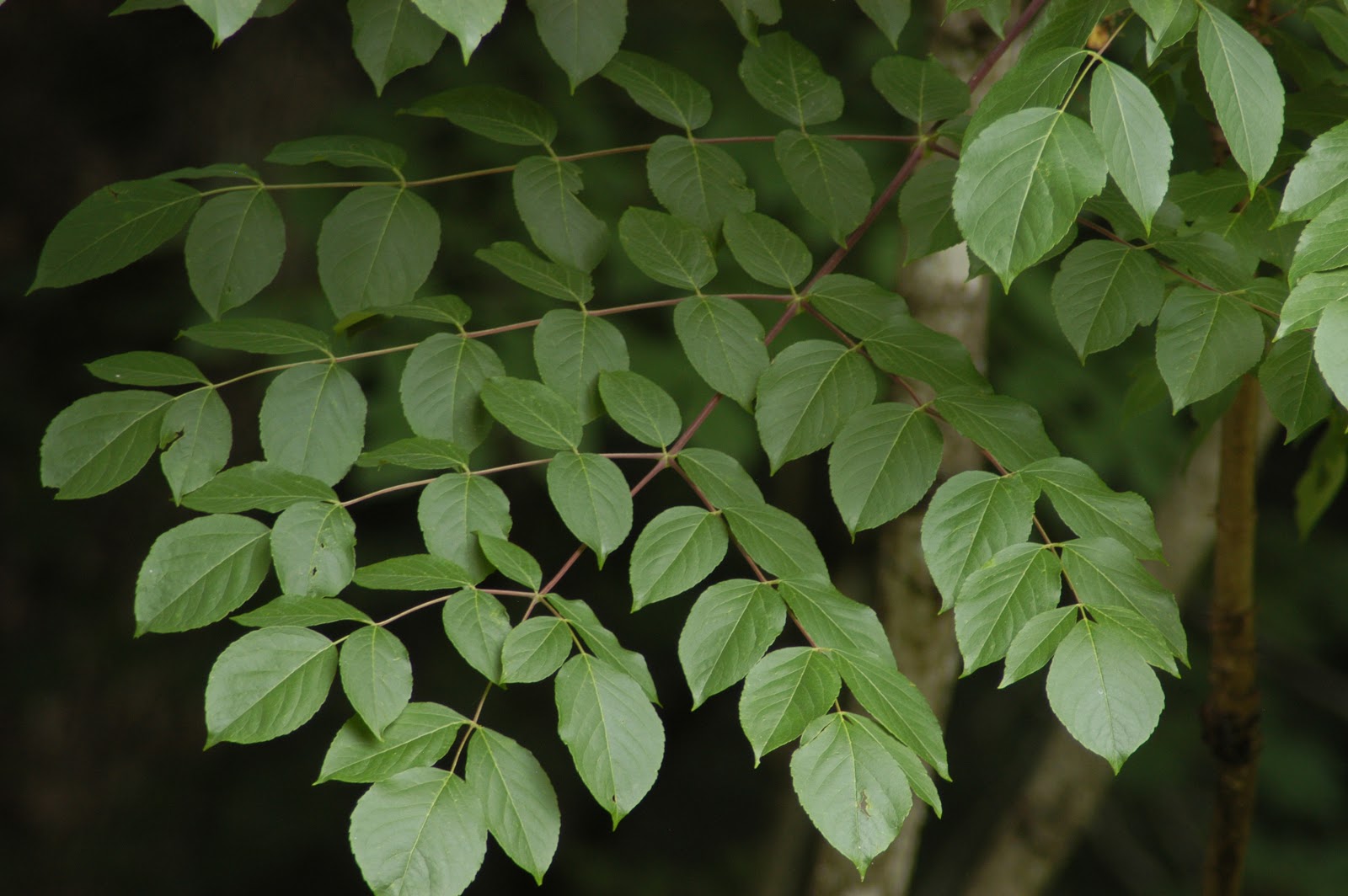
The leaves of the Yellow Birch tree are alternate, simple, and 2-4 inches long.
The leaf has a pointed tip.
The leaf is dark green above and yellowish green below.
The leaf has finely toothed edges.
The stem smells like wintergreen when scratched.
The bark peels from the side in strips that are paper-like.
The bark is a yellowish gray and has horizontal lines.
The tree usually grows to 70 - 100 feet.

Winter:
buds and limbs, twigs, bark

The Winter Yellow Birch Tree at the Botanical Gardens of Asheville

Spring:
catkins (flowers)

This Yellow Birch lives at Montreat College by Lake Susan. 


Summer:
leaves, fruit
The Yellow Birch Tree - Betula alleghaniensis by Robert Priddy 
www.RobertPriddyPhoto.com

Fall
Leaves


The Yellow Birch Tree

The Yellow Birch Tree

This Yellow Birch tree lives at the Asheville Botanical Gardens.  The yellow leaves are a bright light on this rainy day.  ashevillebotanicalgardens.org


For the love of the trees, Becky
Go outside and be in nature; feel the miracle of life all around you.

Friday, January 12, 2018

Tag Alder - Alnus serrulata

Betulaceae - Birch Family
A Year With the Trees tree No. 12
Tag Alder
Alnus serrulata

Where to find:
 At the Botanical Gardens of Asheville, North Carolina http://ashevillebotanicalgardens.org
and the Fletcher Park in Fletcher, North Carolina. 

This tree is one of the members of the family, Betulaceae that is native to the United States and the Southeast. 

Winter:
buds and twigs, bark, fruit
Tag Alder, Alnus serrulata, The Botanical Gardens of Asheville
This Tag Alder lives by the creek at the Botanical Gardens.  The light was beautiful this morning as I walked by the beautiful trees.  I always see these trees as being graceful and dancing as they sway in the wind and the light.  One can sit near here at the creek and I encourage everyone to do so.  Just take a moment and sit on a sunny day on the creek and just watch as the trees sway and bend and seem to dance in the light.

The Alder - Photo by Robert Priddy. www.robertpriddyphoto.com
This is one of the first trees to bloom in the spring. Sometimes blooming as early as January. 

Spring:
leaves, flowers, fruit

The Betulaceae Family of the Southern Appalachians:

Tag Alder
Yellow Birch
Black Birch
River Birch
Paper Birch
American Hornbeam
Eastern Hophornbeam

When I see a tree in this family, I see the  male flowers called catkins and female flowers that are like little pine cones.  The female and male flowers both grow on the same tree before or at the same time that the leaves appear.   
I see toothed, alternate, simple leaves.  The leaves are usually in the shape called ovate or obovate.   The leaves are deciduous and turn yellow in the fall before falling to the ground.

The fruit in this family is a single seeded nutlet.


This Alder tree is a national champion alder tree.
I read that Asheville was the home of the champion Alder in the book, Trees of the Smokies. So, my daughter and I drove to the river where we knew it was suppose to be, and we walked by the side of the river till we found it. It is so beautiful. She took my photo as I stood inside the tree's circle of trees.
The leaves are obovate shaped and 3-5 inches long. The leaves are finely saw toothed and dull green. This tree is usually found by streams and banks of rivers.

Summer:
leaves, fruit
http://www.flickr.com/photos/claytonsnatives/3754927053/lightbox/#/photos/claytonsnatives/3754927053/
The Tag Alder tree is called also the Hazel Alder.  The Tag Alder tree actually improves the fertility of the soil in which this tree grows by providing additional nitrogen by a process called nitrogen fixation.

This tree is the host plant to four moth species.  This is the caterpillar of the Iron Prominent moth (Notodonta dromedarius).  It was photographed after it fell from an Alder tree.
Derek Parkinson [CC-BY-SA-2.0 (www.creativecommons.org/licenses/by-sa/2.0)], via Wikimedia Commons


Fall
leaves, fruit
The Tag Alder - Alnus serrulata.  Photo by Robert Priddy
This tree lives along streams and wet areas at 3,000 feet elevation or less.  The fruit looks like tiny pine cones and they stay on the tree most of the year.  


For the love of the trees, Becky

Thursday, January 11, 2018

Devil's Walking Stick - Aralia spinosa

Araliaceae - Ginseng Family
A Year With the Trees tree No. 11
Devil's Walking Stick
Aralia spinosa

Where to find:  At the Botanical Gardens of Asheville, North Carolinahttp://ashevillebotanicalgardens.org

This tree is the only member of this family, Araliaceae, that is native to the United States and the Southeast. The trees in these photos live at the Asheville Botanical Gardens. www.ashevillebotanicalgardens.org

These trees are easy to identify this time of the year by the short, sharp spines which are all over the trunk and limbs. You for sure do not want to do much tree hugging with this particular tree; I always save my tree hugging for other trees.

Winter:
buds and twigs, bark, fruit

Devil's Walking Stick Bark

Devil's Walking Stick Bark

Spring:
leaves, flowers, fruit

The shoots of this tree in the spring can be cooked and eaten.
  I hear they taste asparagus like.  


Summer:
leaves, fruit
Devil's Walking Stick, The Botanical Gardens at Asheville.
Devil's Walking Stick in the Summer


Fall
Leaves

Devil's walking stick changing colors

The Devils Walking Stick


The Devil's Walking Stick

What a great tree for Halloween!!! The very name of this tree sounds like a Halloween story waiting to be told.

This tree has short, sharp spines that will hurt your fingers when you touch the stems of this tree. I think that must be why it is called the Devil's walking stick. For who but the devil himself could walk with sharp spines digging into his hands while using a branch of this tree as a walking stick?

"I would rather sit on a pumpkin and have it all to myself than be crowded on a velvet cushion."
Henry David Thoreau

Happy Halloween


For the love of the trees, Becky

Wednesday, January 10, 2018

Common Winterberry - Ilex verticillata

Aquifoliaceae - Holly family
A Year With the Trees tree No. 10
Common Winterberry
Ilex verticillata

Where to find:  At the North Carolina Arboretum in Asheville, North Carolina
The Common Winterberry is part of the family called Aquifoliaceae.  This family has three species that grow in the Appalachian Mountains.  Ilex montana, Ilex opaca, and Ilex verticilalta.

Aquifoliaceae is a family of about 400 species. Most all of these species belong to the genus Ilex, also known as the hollies. They are mostly evergreen trees or shrubs, though some are deciduous and lose their leaves seasonally. 

This family is characterized by having alternate, simple, and often evergreen leaves. This family has small flowers and berrylike drupes.  The flowers are dioecious.  This means that the male and female parts are on separate flowers and separate plants.  Drupes are fruits with a fleshy outer part and a seed inside, like a peach.


Winter:
buds and twigs, bark, fruit

36017 Ilex verticillata by horticultural art
36017 Ilex verticillata a photo by horticultural art on Flickr

The Common Winterberry tree is sometimes called a shrub and it has the word "common" in it.  However, it is anything but common.  I would have it call it beautiful.  It can grow up to 25 feet tall; however,  it is more common for this small tree to be closer to 12-15 feet tall.  The berries that stay on most of the year, are food for many species of wildlife; although, the berries are poisonous to humans.  The leaves are deciduous; so in the winter, the identifying feature is the small red berries.  The red berries usually have 6 seeds inside of them.  This small tree is said to be one of the most beautiful trees in the Southern Appalachians all winter long.

Thank you, Fred, for this incredible image.  http://www.flickr.com/photos/horticultural_art/


more Winter time tree observations
Common Winterberry


The shadows on the Winterberry tree that were cast by the low late afternoon sun caught my eye.  The berries are still on this tree.  The Winterberry tree that lives by my own house, at Priddy Woods, has had every single berry eaten away by a flock of Robins. The Robins came in one day and ate all the dogwood berries and the Winterberry tree berries.  Robins do not usually come visiting at Priddy Woods; perhaps they were migrating.    I do think a few Cardinals had their share of the berries as well.  I love watching the birds enjoy the berries of winter.  I always ponder if birds that have red in their feathers seem to eat more red berries...hummm.
Spring:
leaves, flowers, fruit
If you have an image of this tree in the spring, please send it to me at celerylady@gmail.com.  Thank you.

Summer:
leaves, fruit
The American Winterberry tree
This small tree grows up to 10 feet tall.  The leaves are deciduous with alternate leaves.  The leaves are around three inches long and 1 inch wide; they are elliptical with a pointed end.  The color of the leaves are dark green and the leaves have serrated margins.  The small white flowers will be on the trees soon.

Fall:
leaves, fruit

If you have an image of this tree in the fall, please send it to me at celerylady@gmail.com.  Thank you.


Becky

Tuesday, January 9, 2018

American Holly - Ilex opaca

Aquifoliaceae - Holly family
A Year With the Trees tree No. 9
American Holly
Ilex opaca

Where to find:  Around Hot Springs, NC, on the entrance road to the spa is one beautiful place.  On the Blue Ridge Parkway near Mt. Pisgah in another place.  I also visit this tree at the Botanical Gardens of Asheville

The American Holly is part of the family called Aquifoliaceae.  This family has three species that grow in the Appalachian Mountains.  Ilex montana, Ilex opaca, and Ilex verticilalta.

Aquifoliaceae is a family of about 400 species. Most all of these species belong to the genus Ilex, also known as the hollies. They are mostly evergreen trees or shrubs, though some are deciduous and lose their leaves seasonally. 

This family is characterized by having alternate, simple, and often evergreen leaves. This family has small flowers and berrylike drupes.  The flowers are dioecious.  This means that the male and female parts are on separate flowers and separate plants.  Drupes are fruits with a fleshy outer part and a seed inside, like a peach.


Winter:
buds and twigs
bark
fruit
leaves
American Holly with beautiful ripe drupes and leaves with sharp pointed tips
The American Holly drupes in December
Blue jays, Thrushes, robins, Catbirds, Mockingbirds, Red-bellied woodpeckers, and Wild turkey, eat the berry-like drupes of American holly. Raccoon and deer also eat the berry-like drupes. Each one of these drupes has four seeds and will ripen on the tree from Sept. till December.  They will remain bright red on the tree through the winter months, providing food all winter long for many birds and mammals.  I have read that these berry-like drupes are poisonous to humans.

I am so very interested in learning more about birds this year and the trees that the birds are visiting.

The American Holly tree offers protection in it's canopy for birds from storms and predators year round with all the sharp points on the end of every leaf.

To see a holly tree on a snowy day with a Redbird or Robin sitting in it's branches always brings a smile to my face and a sense of gratitude to my heart.


Spring:
 leaves, flowers, fruits


You can always identify this tree by its shiny-green leaves. The red berries can be seen on the female holly trees during most of the year. The beautiful white wood has been used for building pianos and organs. Birds love these berries and disperse the seeds which help propagate this tree.

"And as, when all the summer trees are seen so bright and green, the Holly leaves a sober hue display less bright than they.   But when the bare and wintry woods we see, what then so cheerful as the Holly-tree?"
Author: Robert Southey
Source: The Holly-Tree


The American Holly - Ilex opaca
This American Holly lives at the Asheville Botanical Gardens.  www.ashevillebotanicalgardens.org


Summer:
leaves, fruit


American Holly in June

American Holly, Ilex opaca

North Carolina Holly Tree.  Photo by R. B. Priddy

North Carolina Holly Tree by R. B. Priddy


There are three co-champion American Holly Trees in the United States. The largest one of these three is in Alexandria, Virginia. It is 68 feet high and 141 inches in circumference. To look at the Big Tree Registry, go to http://www.americanforests.org/.

Fall:
leaves, fruit
American Holly - Ilex Opaca - in September.
  The holly drupes are all over the tree; most are red and some are green.  


The American Holly Tree

The American Holly Tree

The green berries that are in one of these photos are immature berries that will turn red in a few weeks. These berries grow on the female American Holly tree. This American Holly lives on the Blue Ridge Parkway near Mt. Pisgah. 

Becky

Monday, January 8, 2018

Mountain Winterberry - Ilex montana

Aquifoliaceae - Holly family
A Year With the Trees photo/drawing collection
Tree No. 8
Mountain Winterberrry
Ilex montana

Where to find:  Around Mt. Pisgah campground on the Blue Ridge Parkway.  I walk around the campground and find it healthy and happy there throughout the campground and the trails in and around that area.

Winter:
buds and twigs
bark

Winter before the leaves and berries.
When the Mountain Winterberry loses all their leaves,  this small tree is covered in bright red berries.  These red berries will be eaten by wildlife after a few frosts.  It seems that wildlife knows instinctively not to eat the berries until after several frosts.  For after the frosts, the toxic properties in the berries are no more.

Going out on a cold early winter's day for a walk, I can feel peace in the life that surrounds me in nature.

Spring:
 leaves, flowers
Spring time with berries.


The berries come onto the twigs in April - May and will stay on the tree through the winter to feed many species of birds.


Summer:
leaves, fruit

My journal page for the Mountain Holly

Fall:
leaves, fruit


Mountain Holly

I found the Mountain Holly. It is very much alive and well up on the top of the Blue Ridge parkway at Mt. Pisgah.

The beautiful beautiful Mountain Holly tree is filled with red berries at this time of year. These berries provide food for many birds and small mammals. This is a deciduous Holly, it is the same family as the American Holly, another most beautiful tree.


"Climb the mountains and get their good tidings, Nature's peace will flow into you as sunshine flows into trees. The winds will blow their own freshness into you, and the storms their energy, while cares will drop off like autumn leaves."  John Muir


Becky


Wednesday, November 8, 2017

Sit with a tree in the forest today and feel the beauty around you.


Acer rubrum

The golden fall forest of North Carolina is filled with the Golden Hickories, Beeches, and Birches.

Rosebay Rhododendron - Rhododendron maximum

Ericaceae - Heath Family "A Year With the Trees" - Tree Number 28 Rosebay Rhododendron Rhododendron maximum Spring The Roseb...